
February 9, 2023
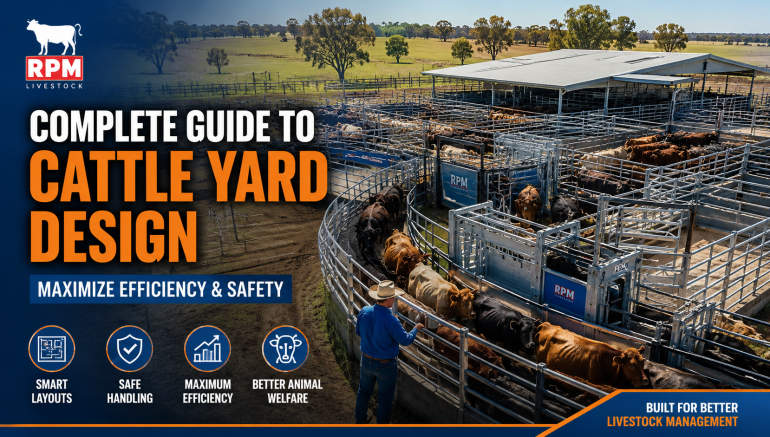
Designing an efficient cattle yard is about much more than steel and gates. A well-planned cattle handling system can improve livestock flow, reduce labour demands, minimise stress on cattle, and significantly improve safety for producers and staff. Whether you are upgrading an older setup or building a new facility from scratch, investing in smart cattle yard design can have long-term benefits for productivity and profitability across Australian beef operations.
For producers across NSW, Queensland, Victoria, WA, and the NT, the right cattle yard layout must suit local conditions, herd size, handling frequency, and future expansion plans. As experienced manufacturers of Australian cattle handling equipment, RPM Livestock Equipment works with beef producers to create practical, durable, and efficient yard systems built for real farm conditions.
Why Good Cattle Yard Design Matters
Poor cattle yard design creates bottlenecks, increases stress on livestock, and raises the risk of injury to both cattle and handlers. An efficient cattle handling system helps producers:
- Improve cattle flow
- Reduce labour requirements
- Increase processing speed
- Improve animal welfare outcomes
- Reduce bruising and livestock stress
- Improve handler safety
- Save time during drafting, loading, and treatments
Well-designed yards also make routine jobs such as weighing, vaccinating, pregnancy testing, and loading far easier during busy periods.
Start with Your Property’s Needs
Before designing a cattle yard layout, producers should evaluate how the yards will actually be used.
Key questions include:
- How many head will move through the yards annually?
- Will the yards handle breeding cattle, weaners, or feedlot cattle?
- How many workers typically operate the system?
- Will cattle be processed frequently or seasonally?
- Is future expansion likely?
- What type of terrain and climate does the property face?
A small family farm in regional NSW may require a compact and efficient setup for occasional handling, while large Queensland stations often need high-capacity cattle handling systems designed for constant livestock movement.
Core Principles of Efficient Cattle Yard Design
1. Prioritise Natural Cattle Flow
Cattle move more calmly when yard systems work with their natural behaviour rather than against it.
Good cattle flow design includes:
- Curved races instead of sharp corners
- Clear forward movement
- Minimal shadows and visual distractions
- Non-slip surfaces
- Consistent race widths
- Quiet handling zones
Curved forcing pens and races are especially effective because cattle naturally prefer to circle back toward where they came from.
Poorly designed systems with tight corners and sudden dead ends increase stress and slow movement dramatically.
2. Separate Working Areas Properly
Efficient cattle yard layouts should divide operations into clear zones.
Typical areas include:
| Yard Area | Purpose |
|---|---|
| Holding paddocks | Temporary holding before processing |
| Receiving yards | Initial gathering and sorting |
| Forcing yard | Moving cattle into the race |
| Race system | Single-file movement |
| Crush area | Treatment, weighing, pregnancy testing |
| Loading ramp | Truck loading and unloading |
| Drafting section | Sorting cattle into groups |
This separation improves flow and prevents congestion during handling.
3. Design for Worker Safety
Safety is one of the most important aspects of modern Australian cattle yard design.
Key safety features include:
- Escape gaps and walkways
- Secure gate latches
- Anti-slip surfaces
- Proper lighting
- Safe gate swing directions
- Adequate visibility for handlers
Modern cattle handling systems should reduce direct contact between people and livestock wherever possible. Installing high-quality crushes, races, and drafting systems also lowers injury risks during processing.
Recommended Space Requirements
Every operation differs, but overcrowding cattle in yards creates stress and handling problems.
General space guidelines include:
| Cattle Type | Recommended Space |
|---|---|
| Adult cattle | 1.8 to 2.5 m² per head |
| Weaners | 1 to 1.5 m² per head |
| Bulls | Additional space required |
| Holding paddocks | Larger allowance for longer stays |
Larger receiving yards help reduce pressure during processing days and improve cattle movement into forcing areas.
Choosing the Right Yard Layout
Straight-Line Layouts
Straight systems are simple and cost-effective for smaller operations.
Advantages:
- Easier construction
- Lower initial cost
- Compact footprint
Limitations:
- Reduced cattle flow efficiency
- More stress at corners and dead ends
These layouts often suit smaller family farms with lower handling volumes.
Curved Cattle Yard Layouts
Curved designs improve cattle movement significantly.
Advantages:
- Better livestock flow
- Reduced stress
- Safer handling
- Faster processing
Curved systems are increasingly popular across larger Australian beef operations.
Essential Components of a Modern Cattle Handling System
Cattle Crushes
The crush is the central working point of the yard system.
A high-quality crush should provide:
- Safe head restraint
- Easy side access
- Smooth operation
- Durable galvanised construction
- Efficient cattle entry and exit
Australian producers often prefer heavy-duty crushes built for harsh rural conditions. RPM offers crush systems designed specifically for demanding Australian livestock operations.
Cattle Races
Races should encourage calm single-file movement.
Important design features include:
- Correct width sizing
- Curved alignment where possible
- Strong side panels
- Anti-backing devices
- Quiet operation
Solid race sides often improve movement because they minimise distractions.
Drafting Systems
Efficient drafting systems save significant labour during sorting and processing.
Modern systems may include:
- Manual drafting gates
- Automatic drafting technology
- Multiple sorting lanes
- Integrated weighing systems
For larger stations, automated systems can dramatically improve throughput.
Loading Ramps
Loading ramps must suit both cattle and transport requirements.
Good loading ramp design includes:
- Adjustable height
- Non-slip flooring
- Solid sides
- Safe operator access
- Gradual incline
Proper loading facilities reduce livestock stress and loading times considerably.
Case Study: Small Family Farm Setup
A family-run beef property in regional NSW running 250 head may prioritise:
- Compact cattle yard layout
- Multi-purpose holding yards
- Straight race system
- Manual drafting gates
- Single-person operation capability
For these producers, efficiency and affordability are key considerations. A well-designed compact yard can still deliver excellent cattle flow when planned properly.
Case Study: Large Queensland Station
A large Queensland cattle station handling several thousand head annually requires a different approach.
Key priorities may include:
- High-capacity receiving yards
- Curved race systems
- Multiple drafting lanes
- Heavy-duty crushes
- Semi-automated handling systems
- Large truck loading zones
In these operations, reducing labour hours and improving throughput becomes essential.
Planning for Future Expansion
One of the most common mistakes in cattle yard design is building only for current needs. Australian beef operations often grow over time, and upgrading poorly planned systems later can be expensive.
Smart planning includes:
- Space for additional yards
- Expandable race systems
- Future automation compatibility
- Larger loading areas
- Flexible drafting layouts
Working with experienced cattle yard designers can help producers avoid costly redesigns later.
Importance of Material Quality
Australian conditions are tough on livestock infrastructure. Heat, dust, rain, mud, and heavy cattle pressure all place stress on equipment. Hence, Quality materials matter.
Look for:
- Heavy-duty steel construction
- Galvanised finishes
- Strong welds
- Durable hinges and latches
- Corrosion resistance
Investing in durable cattle handling equipment reduces maintenance costs and improves long-term reliability.
Using Technology in Modern Cattle Yards
Many Australian producers are integrating technology into cattle handling systems.
Examples include:
- Electronic identification systems
- Automated drafting gates
- Digital weighing systems
- Remote monitoring cameras
- Data recording integration
These technologies improve herd management and streamline livestock processing.
Why Professional Yard Design Matters
Every property has unique operational needs.
Professional cattle yard planning helps producers:
- Maximise efficiency
- Improve livestock safety
- Reduce labour demands
- Avoid costly mistakes
- Future-proof operations
RPM Livestock Equipment provides practical guidance and free draughtsman consultation services to help producers design systems tailored to their operations.
This can be especially valuable for producers upgrading older facilities or building entirely new cattle handling systems.
Even small changes can make handling safer and more efficient.
Frequently Asked Questions
What is the best cattle yard layout?
The best cattle yard layout depends on herd size, handling frequency, available space, and labour requirements. Curved systems generally improve cattle flow and reduce stress.
How wide should a cattle race be?
Most cattle races are designed around 700 to 750 mm wide for adult cattle, although sizing depends on livestock type and operation requirements.
What is the safest cattle handling system?
Safe systems include proper escape routes, anti-slip flooring, secure gates, and well-designed crushes and races that minimise direct human contact with livestock.
How much space do cattle need in holding yards?
Adult cattle generally require around 1.8 to 2.5 square metres per head depending on handling duration and conditions.
Should I upgrade or rebuild my cattle yards?
If the existing layout creates major bottlenecks or safety concerns, rebuilding may provide better long-term value. Smaller operational issues can often be improved with targeted upgrades.
Conclusion
An efficient cattle yard design improves far more than livestock handling. It directly impacts labour efficiency, animal welfare, workplace safety, and overall productivity. For Australian beef producers, investing in well-designed cattle handling systems can deliver benefits for decades.
Whether you operate a small family farm in NSW or a large-scale Queensland station, practical cattle yard layouts tailored to your operation will always outperform generic solutions. To explore durable Australian-made cattle handling equipment and professional yard design support, visit https://www.rpmrural.com